Thursday, 8 December 2011

5 Branding Basics Every Logo Designer Should Know


Oct 24 2011 by 
Subeesh Kottay
He is a web developer/designer who specializes in front-end development (JavaScript, HTML, CSS) and PHP development

While many articles try to dissect the process of designing a logo itself, I will attempt to share tips from my experiences with branding-focused logo design for the real world.

5 Branding Basics Every Logo Designer Should KnowPhoto by lpwines
With the surge of "stock" logos, the quality of branding for new companies is literally going downhill. Many new designers fail to see that a logo, unlike any other design element, is literally the face of a company, and hence attached to a much larger beast. You can’t peel it off from a book and slap it onto things like a sticker.

A logo versus a brand

Let’s begin with the fine difference between a logo and a brand:

Logo

"The logo (ideogram), is the image embodying an organization. [...] Logos are meant to represent companies’ brands or corporate identities […]"
- Logo as defined by Wikipedia

Brand and identity

"[A] burning scar [with] bankable value"
- From BusinessWeek

JPEG 101: A Crash Course Guide on JPEG


JPEG 101: A Crash Course Guide on JPEG
JPEG, a compression algorithm optimized for photographic images, is something we encounter on a regular basis. JPEG is not limited to a certain amount of color (unlike GIF, for example) and is popular due to its variable compression range, meaning that you’re able to more easily control the amount of compression, and consequently, the resultant image quality. In this guide, we will discuss the important things you need to know about JPEG.

Working with Visual Weight in Your Designs


Oct 21 2011 by Subeesh Kottay
He is a web developer/designer who specializes in front-end development (JavaScript, HTML, CSS) and PHP development


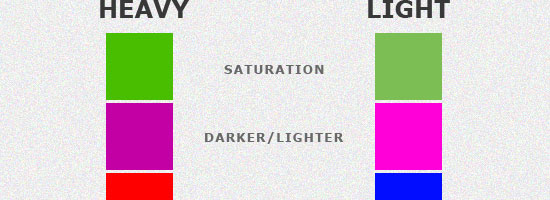
In design, visual weight is the notion that design elements have varied weights; that is, some objects, even on a two-dimensional medium, can appear to be heavier than others. Visual weight is a powerful concept that allows us to create visual hierarchy, symmetry, balance, and harmony in designs. When applied strategically, the concept of visual weight can help us guide the viewer’s attention to the places we want in a design. This article covers the concept of visual weight and the factors that affect it.